

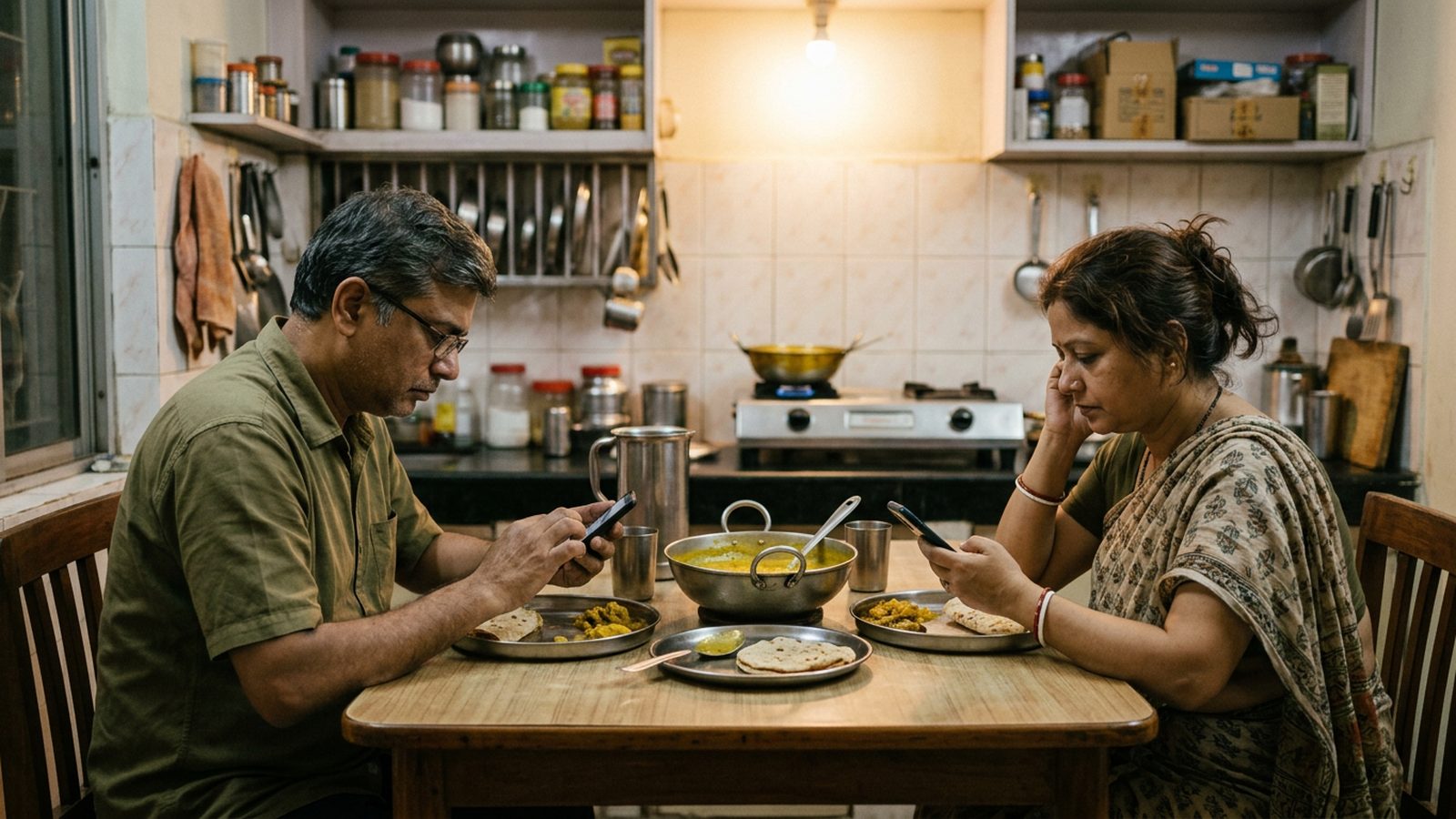
What emotional distance in a marriage looks like
Emotional distance is when two spouses manage daily life well together, bills, meals, children, the in-laws, but have quietly stopped sharing what is actually going on inside them. You can sit across the same dinner table every evening and still feel like you are living parallel lives. It builds slowly: shorter answers, less curiosity about each other's day, affection that has become a routine instead of a choice.
This is different from a marriage full of fights. There may be no conflict here at all, and that absence of conflict is sometimes mistaken for peace, when really it is two people who have stopped reaching for each other. It can sit alongside the kind of loneliness we have written about before in why some people feel lonely even though they are married, where being with someone and feeling unseen by them happen at the same time. It's also a different problem from feeling actively dismissed when you do try to talk, which we cover separately in why you might feel like your spouse doesn't listen to you; here, the issue is more that the talking itself has quietly stopped.
A research review published in the Journal of Marriage and Family looked back at a decade of marriage studies and found that, contrary to popular belief, satisfaction does not steadily decline for most couples over the years. Many marriages stay fairly stable for long stretches, and sharp drops are usually tied to specific stressful periods, a new baby, a job loss, a health scare, rather than an inevitable slide with time (Karney & Bradbury, 2020, read the review). That is worth knowing here: feeling like roommates is usually traceable to a specific stretch of life you are both in, not a law of long marriages.
Why it happens, especially in Indian households
Joint families, long commutes, and the pressure to keep everyone else comfortable often leave a couple with little left for each other by the time they are finally alone. Many of us also grew up watching our own parents run a marriage as a working partnership rather than an emotionally expressive one, so distance can feel normal until it starts to hurt. Festivals, in-laws, children's school routines, all of it can fill a calendar so completely that time for "us" quietly disappears. If you also feel like you have lost the knack of having a real conversation with anyone, including your spouse, this is often where it starts.
Closing the gap: where to start
- Name it out loud, gently. Tell your spouse you have noticed the distance and that you want to close it, without framing it as their fault.
- Protect one short window a day, ten minutes without phones, after dinner or before sleep, to ask what actually happened in their day rather than just logistics.
- Bring back one shared activity you used to enjoy together, a walk, cooking, a weekend routine, even if it feels a little forced at first.
- Say one honest thing you are feeling each week that is not a complaint: tired, proud, worried, grateful.
- Notice something your spouse does for the relationship, even a small thing, and say so out loud.
When to talk to someone
If you have tried the steps above for a few weeks and the distance has not moved, or if one of you feels more relieved than bothered by it, that is worth a longer conversation, with each other and possibly with someone outside the marriage. A trusted friend can help you feel less alone in it, but a friend usually cannot see the pattern running between the two of you the way an outside professional can.
If you want to put words to what you are feeling before you raise it with your spouse, the Clarity app lets you talk to a trained listener over chat or call, privately, without needing to explain your whole marriage history first. If the distance has lasted months and keeps returning despite your efforts, Clarity's counsellors work specifically with the kind of long-running patterns that a single conversation at home cannot fix. You can browse more on the marriage topic page if you want to read around the subject first. If the distance in your marriage ever comes with fear of your spouse, threats, or feeling unsafe at home, that is a different situation, and it's worth talking to a professional about it now. Persistent distance that neither of you can shift on your own is otherwise exactly the kind of thing professional help is good for, and reaching for it is not a sign the marriage is over.